Two Bars, One Vanishing Point
Two equal lines drawn across converging rails keep looking unequal, and part of the reason lies in how the visual system reads depth.

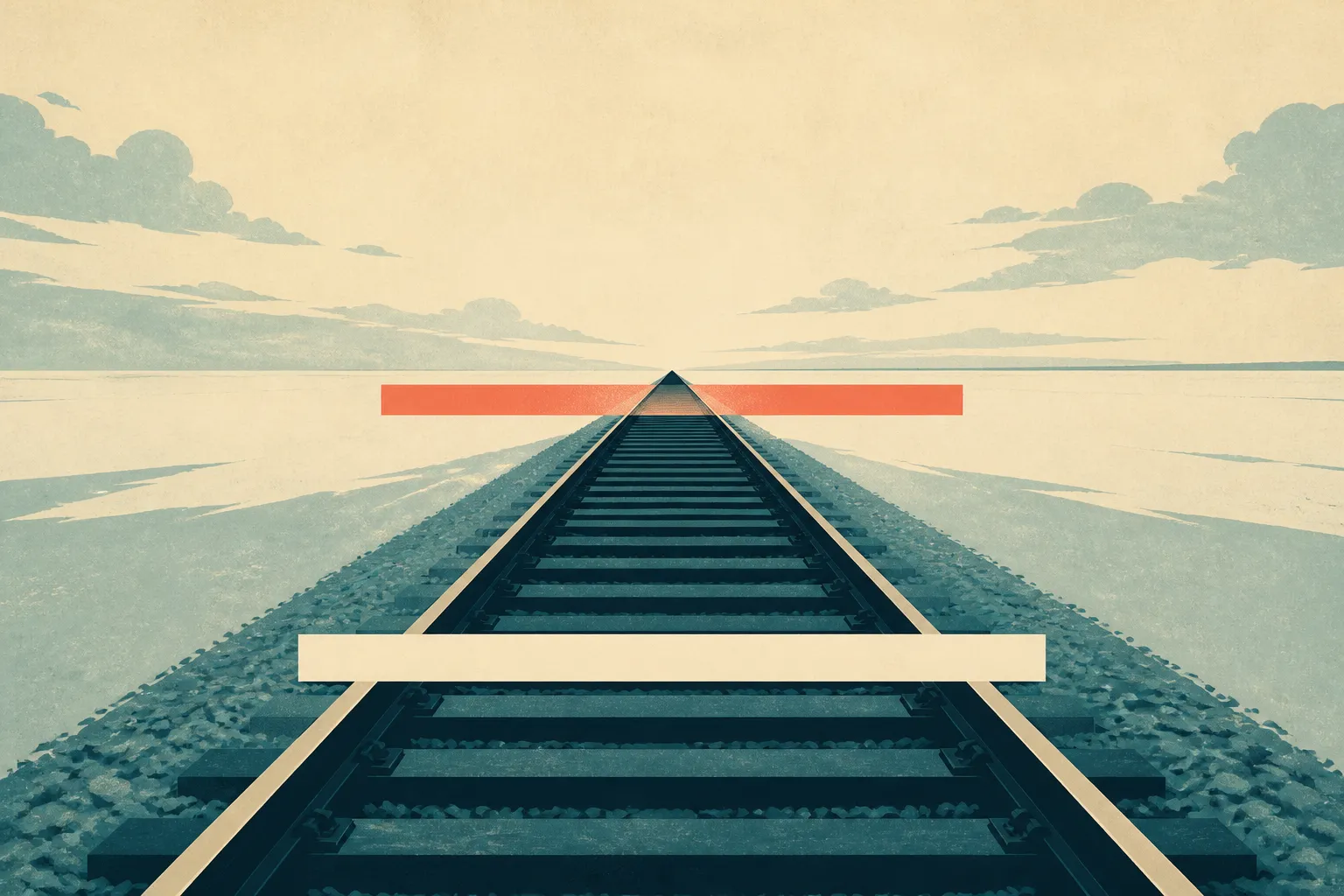
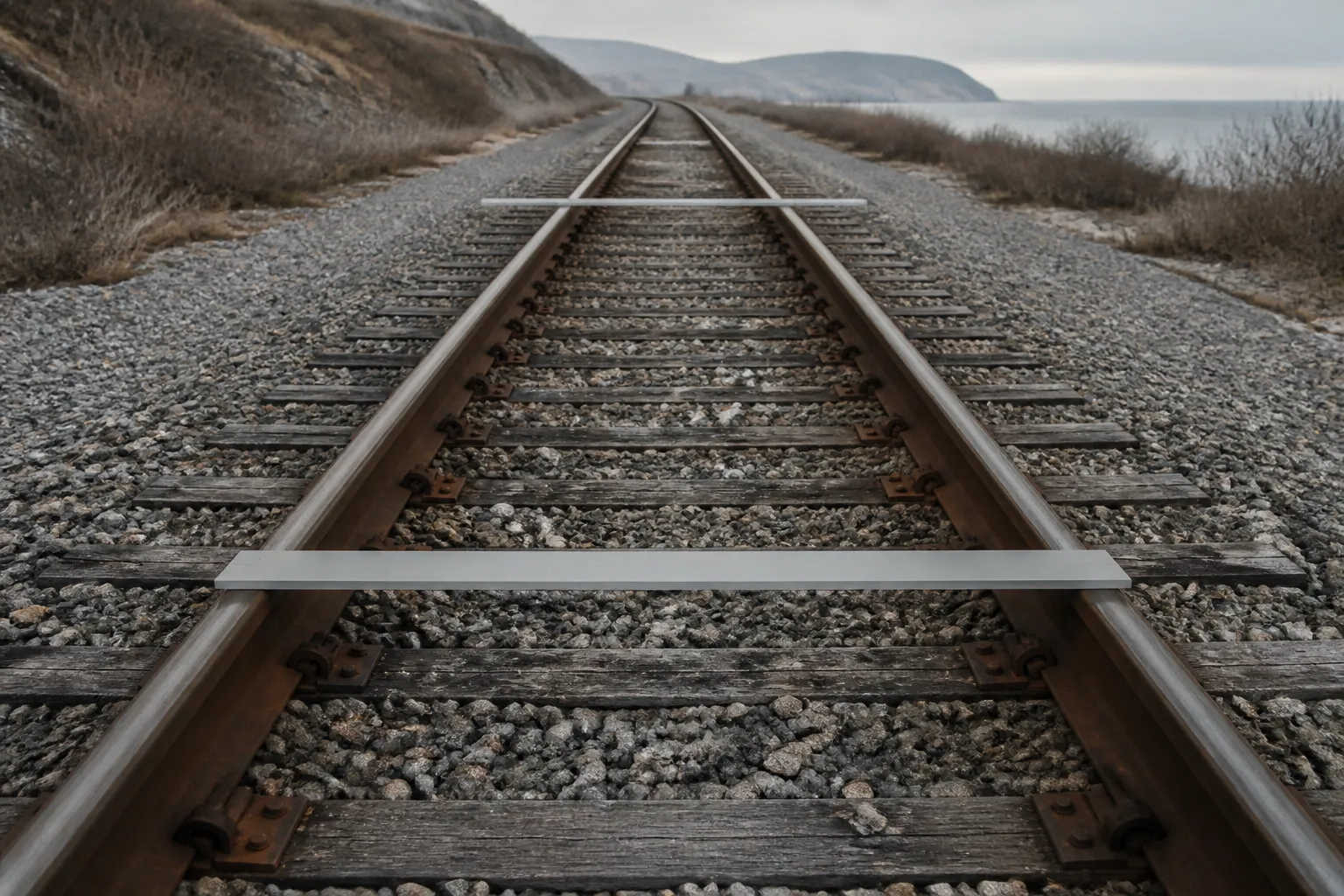
Lay two identical bars across a drawing of railway tracks, one near the bottom and one near the top. The upper bar looks longer. Measure them with a ruler and they match. Look again and the upper one is still longer. That small stubbornness is the whole interest of the Ponzo illusion.
What the Ponzo Illusion Shows
The Italian psychologist Mario Ponzo described the effect in 1911. The setup is plain. Two horizontal lines of equal length sit over a background of converging lines, usually drawn as rails running toward the horizon. The line closer to where the rails meet usually looks wider or longer than the one near the bottom.
Textbook treatments tend to stress one point, and it is the right one. Knowing the lines are equal does not switch the effect off. A viewer can measure, agree with the measurement, and still see a difference. Perception here runs somewhat apart from what the viewer knows. The ruler wins the argument, but the eye keeps its own record.
Why Converging Lines Suggest Depth
In the physical world, parallel lines seem to draw together as they recede. Rails, road edges and the sides of a long corridor all do it. The brain has met this pattern so often that it treats it as a depth cue. Where the lines narrow, the scene is far away.
Now place the two bars in that scene. The upper bar sits in the region the brain reads as more distant. Both bars cast retinal images of the same size. An object that is farther away and still produces the same image must be physically larger. So the brain scales the upper bar up. No one decides this. It is applied before the viewer has a say.
The same retinal image can therefore be read as two different sizes. The difference lies in what surrounds it, not in the image itself.
Size Constancy and the Role of Experience
This scaling belongs to a habit called size constancy. A person walking away does not seem to shrink, even though the image on the retina does. The brain keeps perceived size steady by accounting for distance. Most of the time this is useful. The Ponzo drawing supplies an artificial depth cue, and the same correction is applied where none is needed.
Researchers still ask how much of the effect comes from the stimulus itself and how much from learned experience. A 2019 study of orientation compared upright and inverted versions. The illusion persisted even when the inducing lines were incompatible with the two targets sitting at different distances. Orientation still changed its strength. One suggestion is that real-world asymmetries, such as light falling from above and ground planes running below, could matter if experience plays a part.
The result does not settle the matter. It suggests that more than one process contributes, and that no single account covers every case.
What Brain Imaging Suggests
A 2015 study used fMRI to estimate population receptive fields, the patch of visual space each cluster of cells responds to. When a three-dimensional scene implied a far apparent depth, receptive field positions in early visual areas V1 to V3 shifted toward the fovea, the centre of gaze. That shift fit the size the viewer perceived. In V1, its size correlated with the strength of the illusion across individuals.
This places part of the effect early in the visual system, not only in late judgement. It is evidence about where the illusion shows up, not a proof of one explanation. Only abstracts and partial text were available for this summary, so the methods and sample details are worth checking in the original papers.
Using the Illusion Critically
Many pages present the illusion as a party trick. Psychology courses point out that scientists use such figures for other ends. They ask what people experience, which brain regions are involved, and which variables strengthen or weaken the effect.
Some useful questions follow from that. Does the effect depend on the converging lines being read as depth? What happens when the background cues are removed? How does flipping the figure change its strength? Each one is a test of mechanism, not an admiration of the picture.
Caution is also in order with commercial pages. Statements that the brain prioritises depth over measurement are general framing, not measured findings. The competing explanations remain open.
The rails, at least, do what they were built to do. They run to a point that does not exist.
Sources
- Influences of orientation on the Ponzo, contrast, and Craik-O’Brien-Cornsweet illusions - PMC
- Illusions | Introduction to Psychology
- https://arxiv.org/pdf/2404.05290
- Illusions | Introduction to Psychology – Lindh
- Ponzo Illusion | Intro to Brain and Behavior | Fiveable
- https://arxiv.org/pdf/2508.12422
- The Ponzo illusion: when the brain misinterprets size | MOI Madrid
- Position shifts of fMRI-based population receptive fields in human visual cortex induced by Ponzo illusion | Experimental Brain Research | Springer Nature Link