The Crowd Around the Figure
Laboratory work on visual clutter shows how neighboring objects alter neural signals, but it stops well short of explaining why a striped figure disappears in a beach scene.

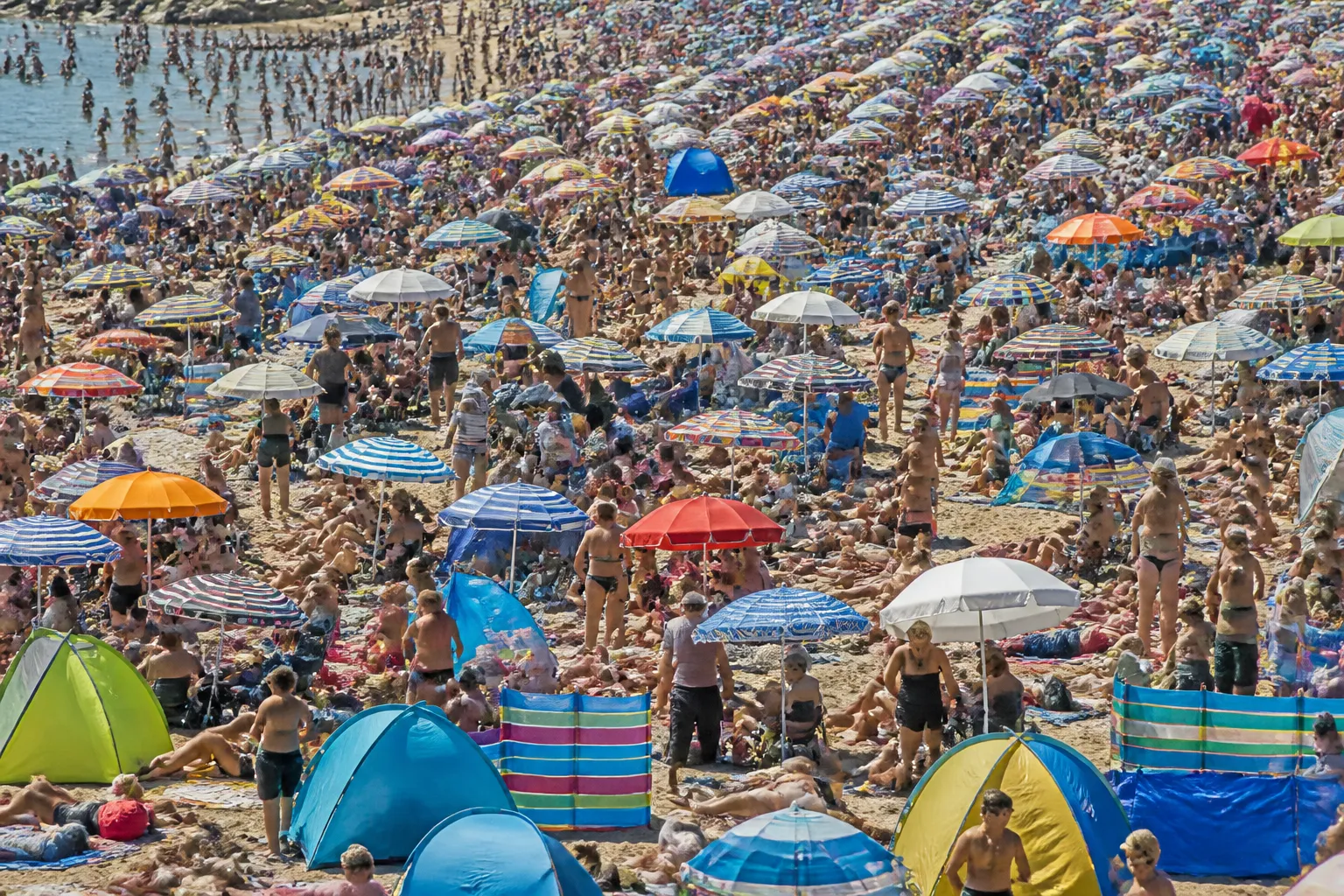
A good crowded panorama does not hide its target. It surrounds the target with so much else that looking becomes slow. Anyone who has lost a striped figure in a beach scene knows the feeling. The figure was probably in view the whole time.
Objects of focus never appear alone. Other objects or people are always in the field of vision. (Paraphrased from Yale News)
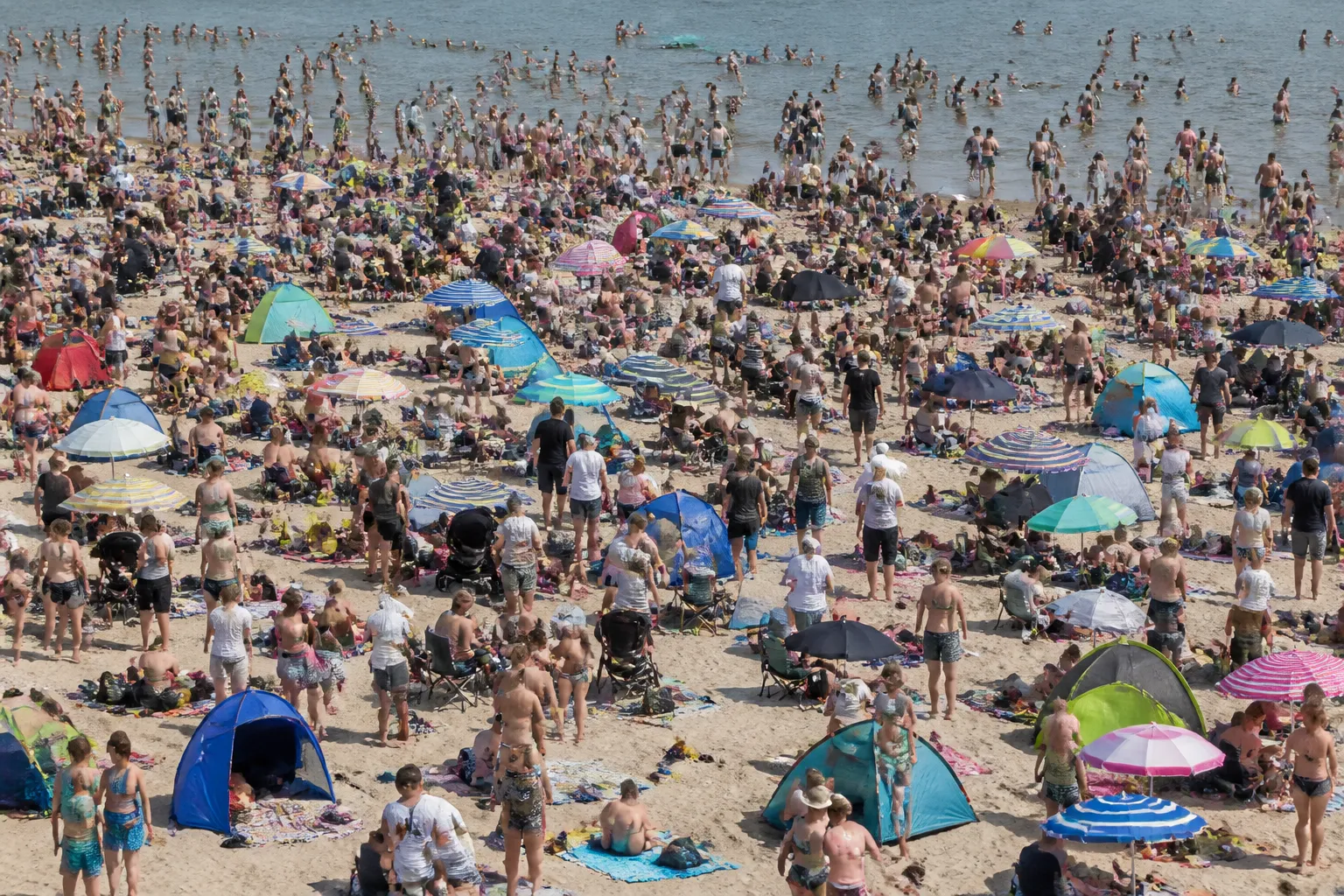
Why clutter at the edge of vision is hard to read
Vision researchers have a name for part of this problem: visual crowding. It describes how clutter near a target makes the target hard to identify. Yale News ties it to the familiar fact that we cannot read out of the corner of the eye, no matter how hard we try. A review of the topic goes further and defines crowding as the inability to recognize objects in clutter. It describes this as a fundamental limit on conscious perception across most of the visual field.
The point matters for any dense picture. In ordinary life a thing we look at is never alone. Other objects or people always sit within the field of view. A panorama simply raises the count of neighbors until the visual system has a steady job of separating one figure from the rest.
What the 2024 Yale and National Eye Institute study measured
Yale researchers published a study in Neuron on October 22, 2024. The National Eye Institute posted its own news item about it. Both describe the same core finding: visual clutter alters how information flows in the brain. The accounts are here: Yale News and the National Eye Institute.
The method was plain. Macaque monkeys were trained to fixate on the center of a screen. Visual stimuli then appeared inside and outside the receptive fields of the neurons being recorded. A receptive field is the patch of the visual world a given cell responds to. The team recorded activity in the primary visual cortex. That let them watch clutter act on neural signals directly, without relying on what an observer said they saw.
Why the location of clutter matters
The sources agree that where the clutter sat in the wider visual field made a difference. They describe the mechanism differently. The National Eye Institute account says location had little effect on how information passed between neurons in the primary visual cortex, but did affect how efficiently it flowed. The Yale account presents location as altering the flow itself. The Yale text was also cut off in the copy reviewed here. The original paper should settle the wording before anyone states the mechanism firmly.
Earlier work cited by Yale points the same general way. Take the word "cat" read out of the corner of the eye. The letter "t" affects identification of the "a" much more than the "c" does, although the "c" and the "t" are equally far from the "a". Position relative to the point of gaze changes how much a neighbor interferes. Same distance, different result.
What search research adds, and what it cannot say
Crowding is only one piece of searching. Other work uses Waldo directly. An MIT news report asks whether the brain scans a page one spot at a time or takes in the whole page at once and zooms in on features such as color and shape. Waldo's red stocking cap and striped shirt serve as the target template. The report says recent evidence suggests the brain may combine both approaches.
A normalization model of visual search, published in PMC, adds another idea. Signals about the target are combined with what the picture itself makes prominent. A normalization step keeps the strongest features from taking over attention. A bright patch unrelated to the target can still pull the eye away if that check fails.
The gap is still large, and it is worth stating plainly. None of this material describes how illustrators of dense panoramas build their scenes, or any deliberate use of crowding in drawing. Saying that artists exploit it in a particular way would go past the evidence. No source here reports search times or error rates for crowded images. The experiments in the Yale and NEI work used monkeys, and whether the results carry over to people reading a printed page is not fully tested in these sources.
Three questions are still fair to ask of any crowded picture. Where is the clutter relative to the point of fixation? Is the target near the edge of the visual field? Does the target have a distinctive color or shape that helps it stand out? What remains is a reasonable suspicion, not a finding. Crowding is real, and crowded pictures are very crowded. The archive of panoramas has yet to be matched with the laboratory.
Sources
- ‘Visual clutter’ alters information flow in the brain | National Eye Institute
- ‘Visual clutter’ alters information flow in the brain | Yale News
- There's Waldo! A Normalization Model of Visual Search Predicts Single-Trial Human Fixations in an Object Search Task - PMC
- Frontiers | Where's Wally: the influence of visual salience on referring expression generation
- Where's Wally: the influence of visual salience on referring expression generation - PMC
- Where’s Waldo? How perceptual, cognitive, and emotional brain processes cooperate during learning to categorize and find desired objects in a cluttered scene - PMC
- Visual Crowding: a fundamental limit on conscious perception and object recognition - PMC
- Research explains how the brain finds Waldo | MIT News | Massachusetts Institute of Technology